It could be that I’ve got better at spotting the signs of surreptitious smartphone use – the tell-tale crotch-stare, the lit-up face as they pretend to be searching for a loose pen in their school bag – but I suspect that pupils are still just really rubbish at disguising it. My theory is that the phone screen is so absorbing that they lose consciousness of where they are and momentarily forget all the stealthy tricks they’ve mastered in the act of, say, throwing a paper dart at a friend while the teacher’s back is turned (to my shame, I still sometimes end a lesson with a sizeable origami armoury at the back of a classroom, having been oblivious to the clearly extensive warfare that had taken place during the preceding hour).
About a year or so ago, I spotted two boys on their phones and suspected that they were messaging one another (“Such a thought-provoking lesson” / “Sir is on amazing form today”, that sort of thing), but discovered that they were actually playing online chess. Chess! These weren’t by any stretch your geeky chess club kids of my schooldays, but rather the sort of lads you might expect to catch vaping behind the proverbial bike sheds. Weird, I thought. Then I started to spot it more. Chess on phones, chess on iPads, chess on quickly minimised tabs in the computer rooms. Eventually I cracked: why the sudden obsession with chess? The answer was upsetting.
“It’s cos of Andrew Tate, sir.”
Andrew f***ing Tate.
I first heard of Tate, the apparent former chess champion, kickboxer and thin-skinned misogynistic moron, sometime around the time of lockdown, the name jokingly dropped by some of my Year 9s in lessons. “He keeps a machete by his bed,” I remember them telling me. Before he started hitting headlines and safeguarding bulletins, I’d assumed he was a John Cena-esque character: the kids weren’t talking about him as a hero figure, more like a jokey parody of masculinity. When his notoriety started to grow, I wasn’t particularly concerned because it didn’t seem like any of the kids were taking him all that seriously.
It’s only over these last couple of years that I’ve had more disturbing conversations about him in the classroom: aside from the brief chess craze, pupils started asking me, more earnestly this time, what I thought of him. When I gave him my honest opinion – that from the little I’d seen he struck me as insecure and pathetic – I was told I’d been brainwashed by the mainstream media. Again, the kids saying these things didn’t fit any of the stereotypes: they were neither obnoxious leering jocks nor creepy loner incels. They were kids who had seemed pretty normal, well-adjusted and – so I had thought up until this point – fairly open-minded.
I should pause a moment and consider how I arrived at this last conclusion. I think my train of thought probably went something like this: these kids like and respect me as their teacher, they know that I’m gay and have no issue with it, so therefore they must be open-minded. Now I type that out it does seem a little self-centred, but as a general rule of thumb, an absence of homophobia does suggest at least a degree of tolerance, right?
But then, there are plenty of exceptions to such a rule: many of my racist Facebook aunties are accepting of gay people, I’ve met gay people who spoke a lot of Daily Mail crap about immigrants, and of course there’s the LGB alliance and their allies who for some reason haven’t yet spotted that the shit being flung at the trans community these days smells identical to the shit flung at them in the 80s and 90s. It’s been a while now since it was only your progressive lefty types who would accept the concept of gay relationships; could it be that gay rights have advanced so far that even today’s misogynists are proud LGBTQ+ allies (erm… yay)?
There is another explanation, and that is that these kids don’t recognise what Tate is doing as misogyny. You and I know they’re wrong, but it’s not beyond the realms of possibility that kids viewing Tate through the lens of Instagram and TikTok are seeing a depiction of him that doesn’t match the one we’ve received through reading our Guardian articles. It doesn’t make Tate’s influence any less pernicious or troubling, but I think there’s a good chance a lot of boys are seeing the flash cars and the ‘winner’ lifestyle he claims to embody and are failing to recognise the viler undercurrents.
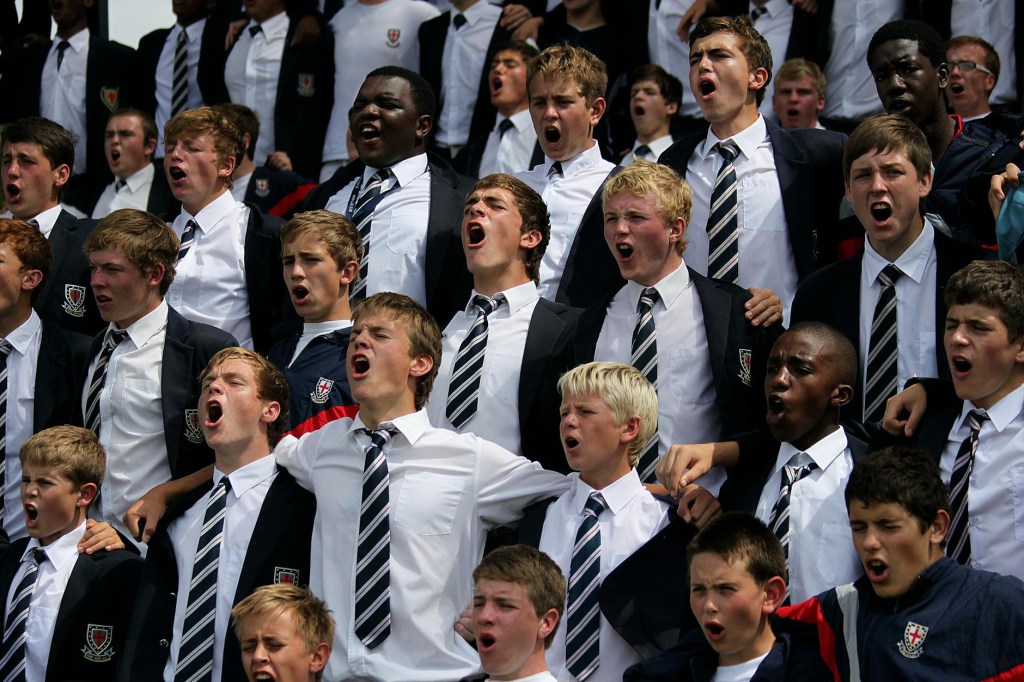
Mine isn’t an all-boys school, but back when we had ability setting, I occasionally ended up with small low-ability groups that contained no girls. It gave the lie to the myth that single-sex education gives students a chance to focus on their work rather than being distracted by, or showing off for, the opposite sex; leaving aside the obvious homophobic assumption for a moment, the idea that boys will behave and focus better without any girls in the room is a complete nonsense. Teenage boys aren’t exactly renowned for watching what they say or do, but take the girls out of the room and the few filters they have will pretty much vanish.
This became most evident when reading our GCSE literature texts and we had to discuss any depiction of a female character: I was bombarded with so many misogynistic viewpoints that I ended up having to devote whole lessons to trying to break down their beliefs. I’ll be honest, my approach to this was pretty cack-handed: in one lesson I took examples from the Everyday Sexism Twitter feed and tried to discuss with them the problems being highlighted. In about 80% of the examples, they failed to see any problem.
“How would you feel,” I asked, “if you were playing football, and rather than admiring your skill as a sportsman, you just had a load of female supporters talking about your legs?”
“I’d absolutely love that, sir.” Well, yes, I suppose you would.
I like to think I got some of them thinking at least, but as a group it felt like I was getting nowhere; the peer-pressure was palpable, and the more I questioned their views, the more defensive they became. With no female students to take my side it felt like an impossible task to get them to recognise the prejudice and bias inherent in their worldview – and this was well before Andrew Tate came along.
One thing I worry about boys growing up now is that maybe it’s hard for them to see the bigger picture, i.e. the millennia of oppression, control, and abuse, and instead they just see the here and now with whinging adults trying to teach them not to treat women as sexual objects just as their hormones are going into overdrive and pushing them to do exactly that. They don’t always see the sexism (or the racism, or the homophobia) that’s come before them, and only see our attempts to lift up the victims of those prejudices – sending those who don’t feel lifted up themselves straight into the arms of men like Tate and Jordan Peterson who have realised that there’s money to be made from telling straight white men that the oppression actually runs in the opposite direction.
To be clear, I’m not saying we stop being proud supporters and allies to marginalised communities – of course I’m not – but we do need to ensure our words and actions don’t lead to a sense of exclusion for kids who might otherwise be susceptible to the likes of Tate. I try nowadays to talk to my classes about the concept of allyship, and to highlight some of the history and the paths that we’re still on with regards to inclusion and equality (I’m only six posts into this blog and I already feel like I bang on about Section 28 too much, but it is a good example of how far we’ve come as a society in such a short space of time, and why it’s so important to stay vigilant – kids tend to find it a real eye-opener, in my experience). It’s probably not going to be enough to reach those who fall completely down the rabbit hole, but it might perhaps hook back some of those teetering on the edge.
Sadly, this is all just another example of how, as teachers, we find ourselves on the frontline of a battle against a societal problem we’re ill-equipped to fight against, if you’ll excuse the excessively masculine military metaphor. I might be naïve, but I’m cautiously optimistic that a lot of the boys who admire Tate will eventually just grow out of it; however, the potential damage caused by the minority who won’t means this remains something we can’t be complacent about. I strongly recommend reading this article, which I saw doing the rounds yesterday after I’d been working on this post for a few weeks. It’s a more in-depth and more thoroughly researched piece than mine and explores some of the more severe cases of radicalisation and efforts to counteract the influence of Tate and other self-styled “men’s rights activists”. Do give it a read if you haven’t already.




 Questioning
Leave a comment