Sport, sport, masculine sport
Equips a young man for Society
Yes, sport turns out a jolly good sort
It’s an Odd Boy who doesn’t like sport
– Sport (The Odd Boy) – Bonzo Dog Doo-Dah Band, 1969
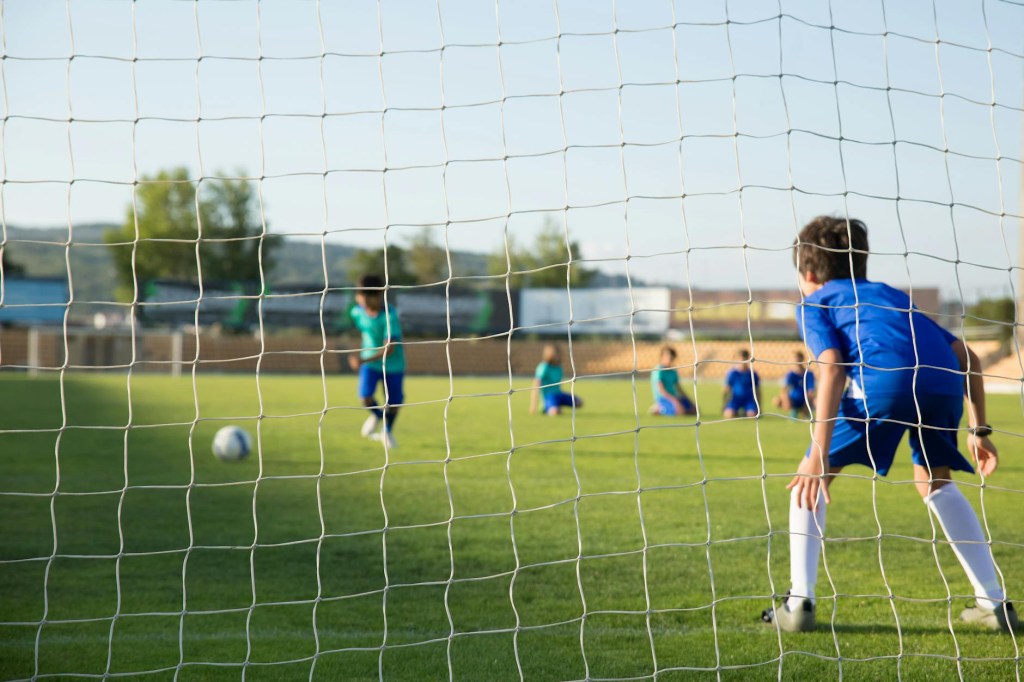
As a boy, I did not like sport. I attended an all-boys school, where sport meant rugby in the winter and cricket in the summer, showers were communal and obligatory, and captains of school were frequently highly ranked bully-boys in the cadet force. I hated it, as I hated the football training my parents dragged me to on wet Saturday mornings, the wrestling games my cousins forced me to submit to and the swimming lessons where I doggy-paddled inefficiently while coaches used me as a model of how not to do it for other children. I was happier in the cocoon of my bedroom, building lego or reading comics or working on little projects of my own devising. Sport was rough and dirty and no fun for an odd boy like me.
I wasn’t completely without ability. I was pretty good at running and racket sports – the sort of exercise which didn’t involve physical contact or teammates that could be let down by my ineptitude. As I reached adulthood, friends encouraged me to join a gym, and again the solo nature of gym workouts suited me: I could plug in some earphones and go at my own pace, with nobody yelling instructions or insults at me, and I soon got over the shame of struggling to lift pathetically light weights when I realised that pretty much everyone else in there was as self-conscious as I was.
There was, though – and still is, from what I see of kids at my school today – a prestige that came with being good at the team sports. Not being good at football, or not being willing to play the game, set you apart from the other boys. My earliest heartbreak came, I think, at the age of about six, when the best friend I used to happily potter around the playground with, having pleasant conversations about maths, suddenly ran away from me one day to join the football crowd. It never occurred to me to join him; I wasn’t the same as those boys, football scared me, and I knew I wouldn’t fit in. Twelve years later, at university, I remember walking past the football field and a ball flying towards me. There were shouts from the pitch for me to kick it back, and even at that age I still didn’t dare to touch it in case I kicked it wrong, somehow. Instead, I pretended not to hear – despite obviously being able to – and accepted being called a dickhead for not helping them instead.
Having avoided sport for some time, I decided recently to take up tennis and joined a local club. Everyone there has been incredibly friendly and welcoming – and I’ve picked it up again pretty quickly, with a few lessons – but even so, I’ve noticed those same feelings from PE and football training recurring, particularly when playing with and against other men. I’ve realised that there’s an insecurity within myself that not only fears the embarrassment of not meeting certain physical standards, but also views this as an inherent personal failure.
I don’t think this is necessarily a uniquely gay experience; I imagine that there are men of all sexualities, and across a wide spectrum of sporting ability, that experience this same feeling. Perhaps it’s part of what makes men, men. But for me – and, I imagine with other men who aren’t physically strong or athletic – it’s branded itself into my adult personality: I’m not strong, and therefore not masculine, and therefore I should submit to the “real” men who are, both on the sports field and in society as a whole.
One year when I was in primary school in the early 90s, our teachers held a ‘non-competitive’ sports day: rather than the usual races, we threw bean bags at buckets and all got congratulated for taking part. My parents, together with those of pretty much all my friends, mocked the idea as new-age and ‘politically correct’ (if it was 30 years later, they’d probably have gone with ‘woke’). I don’t remember enough about it now to be able to hold much of an opinion either way, but I find it interesting that the same people who were trying to ‘toughen me up’ with football training reacted with such disdain to any attempt to remove the hierarchical aspect from the sports field, even at that young age.
The sports day at the secondary school I now teach at would be far more to their liking, with traditional track and field events, clear winners and a prominently displayed leader board of school records. I notice it’s often cited as an opportunity for ‘naughty’ kids to shine: that those who don’t do well in the classroom can have an opportunity to excel elsewhere. It seems to me, though, that these are rarely the kids who are lacking in social confidence, and that the surprise in seeing these kids thrive and achieve is limited to the (non-PE) teachers stood supervising the events once a year. Their peers already see them as impressive, more so, usually, than those with any kind of academic success.
Maybe I’m biased, having been the bright nerdy kid back in school. Maybe in another, more athletic life I’d have been the one envying another kid’s book smarts and thinking about how much better life could have been with a few more GCSEs (if anyone like that’s listening, I’m single and a secondary school teacher, so not that much better to be honest). Perhaps, having spent my school days near the top of the academic hierarchy, being much further down the sporting one feels somehow unfair to me. I don’t think, though, that it’s entirely a matter of the grass being greener on the other pitch; I feel, rather, that I’m less secure in myself because of failing to conform with society’s view of masculinity.
I don’t think the answer is necessarily non-competitive sports days, but I do think ‘wokeness’ of other kinds is helping the non-masculine boys of the future. The rise in popularity in women’s football, the outing of various sports stars and the myriad LGBTQ+ fan clubs and teams are taking the emphasis off the macho element of sports and focussing more on inclusion, of getting people involved in sport (it’s probably not a coincidence that I’ve taken up tennis, which arguably has the highest profile female athletes of any major sport). The current push to exclude trans people from sports at all levels seems to me to come from those who are overly fixated on hierarchies and gender stereotypes, forgetting that sport is meant to be, for the vast majority of us who aren’t winning Olympic medals, enjoyable.
Anyway, aside from keeping fit and improving my ITF number, one of my resolutions this year is to write more. Hopefully there’ll be a lot more blogposts from me in 2026.



 Questioning
Leave a comment